Why Choose a Flat Laminating Machine?
Packaging quality now depends on consistency, material efficiency, and reliable production speed. A Flat Laminating Machine supports these demands by joining films, paper, foil, foam, or printed sheets with controlled pressure and heat. Its flat working surface helps maintain even contact across the entire panel. That matters when small air pockets become visible under showroom lighting.
Industry reports support this shift toward dependable converting equipment. Smithers’ The Future of Flexible Packaging to 2028 identifies flexible packaging growth, lightweight materials, and higher performance requirements as major market trends. MarketsandMarkets’ Flexible Packaging Market report also connects demand with improved barrier protection and efficient multilayer structures. These findings suggest a practical reason to consider flat laminating technology. It can help manufacturers produce stable, clean, and repeatable bonded surfaces.
The machine is not automatically efficient.
Operators still need suitable adhesives, accurate temperature settings, and careful alignment. Substrate moisture can affect bonding. Uneven pressure may create wrinkles near the edges. These details are easy to overlook during equipment selection. In my experience, the best results come from matching machine width, roller design, heating control, and production volume. A compact workshop may value simple adjustment and low maintenance. A larger plant may prioritize automation, cycle time, and process monitoring.
Choosing a Flat Laminating Machine is therefore a process decision, not merely a purchasing decision. When correctly specified, it can reduce rework, protect surface appearance, and support consistent output. However, supplier testing remains essential. Real samples reveal limitations that brochures often hide.
What Is a Flat Laminating Machine?
What Is a Flat Laminating Machine?
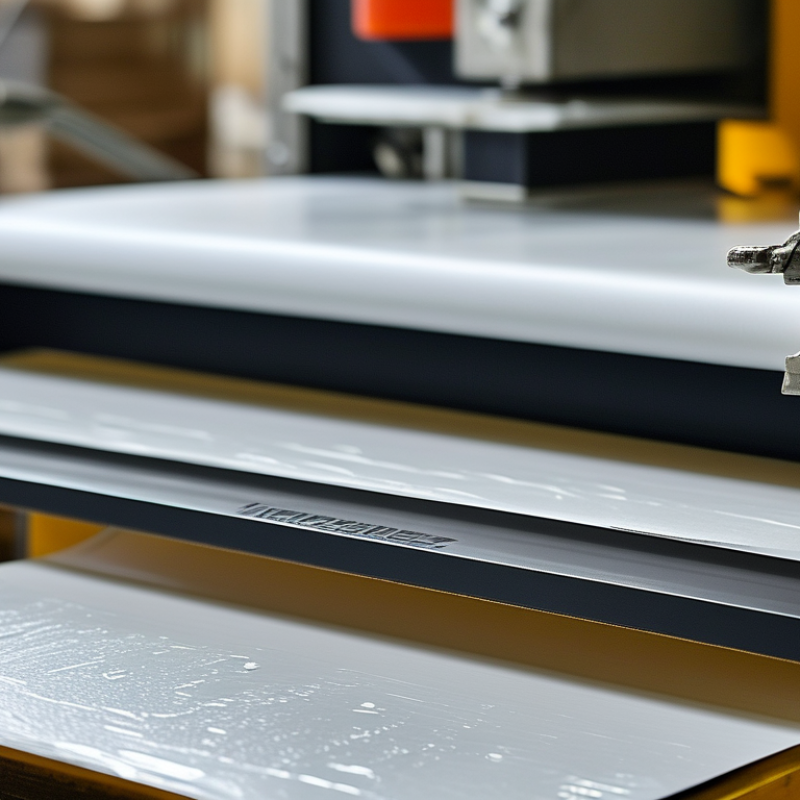
A flat laminating machine is equipment that bonds two or more flat materials into one stable structure. It commonly uses controlled heat, pressure, or adhesive to join sheets evenly. Unlike roll laminators, it processes materials on a flat working surface. The sheet usually stays still during pressing. Pressure creates the bond.
In daily production, an operator places the materials on a platform and aligns their edges carefully. A heated platen then presses the layers for a controlled period. Some machines also use vacuum pressure to remove air pockets between surfaces. This method suits panels, decorative sheets, printed boards, insulation layers, and composite materials. It offers consistent contact across wide areas.
Reliable results depend on clean surfaces, correct temperature, and suitable pressing time. Dust, trapped air, or uneven alignment can weaken the finished panel. Experienced technicians inspect the first pieces and adjust settings before longer production runs. A practical trial should include different thicknesses and surface textures. It is not perfect. Manual loading can take time, and excessive heat may damage sensitive materials. Still, the flat design gives operators clear control over placement, pressure, and bonding quality.
Why Choose a Flat Laminating Machine? - What Is a Flat Laminating Machine?
| Data Dimension | Flat Laminating Machine | Practical Value |
|---|---|---|
| Basic definition | A machine that applies uniform heat and pressure across a flat workpiece to bond a film, foil, paper, veneer, or protective layer to its surface. | Creates a consistent laminated surface with controlled bonding conditions. |
| Operating format | The material is placed horizontally on a flat platen, table, or vacuum bed before the laminating cycle begins. | Suitable for rigid sheets, panels, boards, signs, doors, furniture parts, and other flat components. |
| Typical working area | Common equipment sizes range from approximately 600 × 900 mm for small workpieces to more than 1,200 × 2,400 mm for large panels. | The working area should be selected according to the largest regular panel, not only the average panel size. |
| Heating method | Electric heating elements, heated platens, infrared systems, or heated rollers may be used, depending on the machine design. | Controlled heating helps activate heat-sensitive adhesives and improve bond consistency. |
| Temperature range | Many general-purpose systems operate within approximately 40–160°C, while the usable range depends on the adhesive and material. | Accurate temperature control reduces the risk of incomplete bonding, film shrinkage, or surface damage. |
| Pressure system | Depending on the design, pressure may be supplied by a pneumatic press, hydraulic system, mechanical platen, rollers, or a vacuum membrane. | Uniform pressure helps limit wrinkles, air pockets, delamination, and uneven edges. |
| Vacuum capability | Vacuum-assisted models remove air between the substrate and the laminating layer; typical vacuum levels are often around −0.06 to −0.095 MPa. | Useful for large surfaces, delicate films, contoured panels, and applications where air entrapment must be minimized. |
| Common materials | PVC and decorative films, paper, foil, veneer, textiles, protective films, printed graphics, and selected composite layers. | The adhesive, substrate, and film must be compatible with the machine’s temperature and pressure settings. |
| Typical applications | Furniture panels, kitchen and cabinet components, interior doors, wall panels, signage, printed boards, insulation panels, and decorative surfaces. | Provides a practical solution for both decorative finishing and surface protection. |
| Surface quality | A flat platen or vacuum membrane distributes force over the panel surface, supporting smooth and even lamination. | Helps produce a cleaner appearance and reduces visible bonding defects when settings are correct. |
| Production suitability | Well suited to batch production, customized orders, and medium-volume manufacturing. Continuous roller systems may be more efficient for very high-volume sheet processing. | Offers a balance between flexibility, repeatability, and equipment investment. |
| Control requirements | Operators normally set temperature, pressure or vacuum, heating time, cooling time, and cycle sequence. | Repeatable settings make it easier to maintain consistent results across production batches. |
| Main advantages | Even pressure distribution, adaptable workpiece sizes, reliable surface quality, and compatibility with many flat-panel materials. | A strong choice when quality and flexibility are more important than maximum continuous throughput. |
| Key limitations | Flat systems require loading and unloading space, and the cycle time can be longer than continuous laminating equipment for large-volume production. | Production planning should account for loading time, heating time, pressing time, and cooling time. |
| Best selection criteria | Compare the maximum panel size, material compatibility, temperature uniformity, pressure or vacuum capacity, cycle time, power supply, safety features, and maintenance access. | Matching the machine to the actual substrate, adhesive, film, and production volume is more important than choosing the largest model. |
Note: Operating ranges are typical industry values. The exact temperature, pressure, vacuum level, and cycle time should always be confirmed through the material and adhesive manufacturer’s processing recommendations.