Contact Kelly McNamara for information on products, services or locations.
Global sourcing in msc metal begins with a practical question: which material will perform reliably after production, transport, installation, and years of service? The answer depends on more than price. Buyers must compare strength, corrosion resistance, machinability, weldability, surface finish, dimensions, certification, and supply stability. A bright stainless sheet may look ideal, yet fail in a chloride-rich environment. A cheaper carbon steel grade may require costly coating and maintenance.
“Materials selection is an integral part of the design process,” writes Professor Michael F. Ashby, a leading authority on engineering materials and selection methods. His principle remains valuable for international procurement. The right choice connects engineering requirements with supplier capability. It also reduces avoidable disputes over grade equivalents, tolerances, mill certificates, and inspection results.
This guide examines ten common types of msc metal used in global sourcing, including carbon steel, stainless steel, aluminum, copper, brass, bronze, galvanized steel, tool steel, alloy steel, and titanium. Each category has a different balance of cost, performance, processing difficulty, and availability. Buyers should check standards carefully. “Equivalent” does not always mean identical. Country-specific specifications can create hidden risks.
Real projects are rarely perfect. Forecasts change. Material prices move. Some suppliers communicate poorly. Even experienced teams may overlook packaging damage or batch variation. That is why responsible sourcing combines technical review, sample testing, traceability, and supplier audits. The goal is not simply to find metal. It is to select dependable material for a clearly defined application.
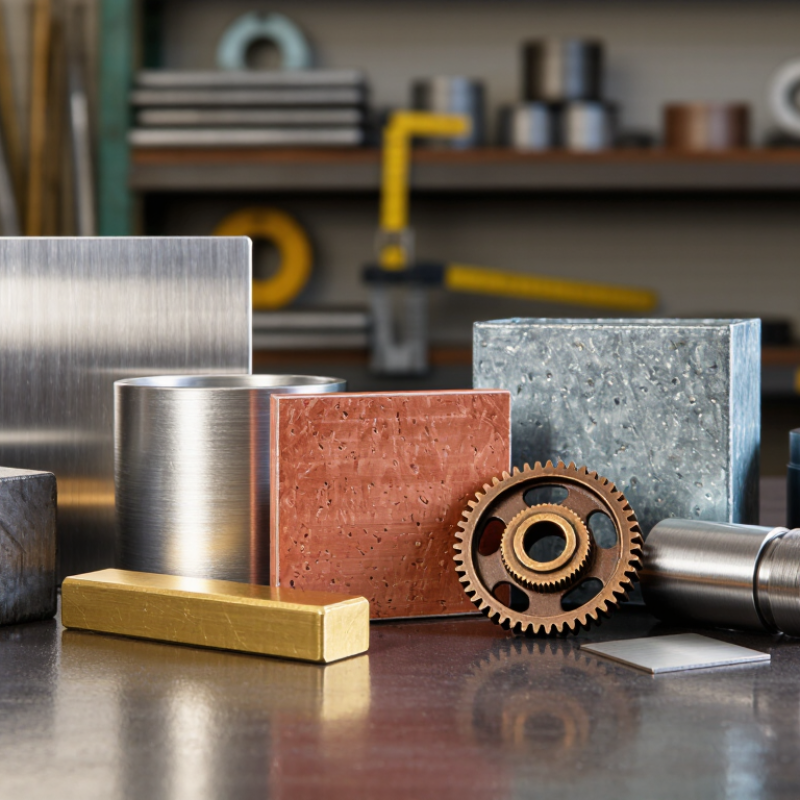
A practical MSC metal taxonomy starts with two families: ferrous and nonferrous metals. Ferrous grades include carbon steel, alloy steel, stainless steel, tool steel, and cast iron. Their iron content usually supports strength, hardness, or wear resistance. Carbon steel may suit frames and plates. Alloy steel supports demanding loads. Stainless steel resists corrosion in wet environments. Tool steel holds cutting edges. Cast iron absorbs vibration well.
Nonferrous grades include aluminum, copper, brass, nickel alloys, and titanium. Aluminum reduces component weight. Copper carries electrical current efficiently. Brass combines machinability with corrosion resistance. Nickel alloys tolerate heat and aggressive service conditions. Titanium offers high strength with low density. These ten categories help purchasing teams compare material families before reviewing detailed grades.
ASTM specifications often define chemistry, processing, testing, and mechanical requirements. EN grades use a different naming structure, such as S235JR or X5CrNi18-10. UNS provides a shared identification code across many material systems. A grade comparison should check chemistry, temper, heat treatment, thickness, and test certificates. Names alone can mislead. I have seen similar-looking grades perform differently after forming or welding. The taxonomy is useful, but not perfect. Supplier documents, traceability records, and independent verification still matter. A small mismatch in carbon content can change weldability, hardness, and delivery risk.
Top 10 Types of MSC Metal for Global Sourcing
Carbon steel remains a practical choice for frames, brackets, shafts, and general fabrication. It offers good strength and predictable machining at a controlled cost. Low-carbon grades weld easily, while higher-carbon grades improve hardness but require greater process control. A small sourcing mistake can create costly rework.
Alloy steel adds elements such as chromium, nickel, or molybdenum for stronger performance. It suits gears, pressure components, and parts exposed to heat or repeated loading. Stainless steel resists rust through its chromium-rich composition. However, “stainless” does not mean maintenance-free, especially near saltwater or chemicals. Always confirm the grade, finish, thickness, and heat-treatment condition.
Galvanized steel uses a zinc coating to protect carbon steel from moisture. It works well for ductwork, outdoor frames, and agricultural structures. Scratches and cut edges still need attention. Tool steel is designed for dies, punches, molds, and cutting tools. Its hardness is valuable, but poor heat treatment can cause cracking. For global sourcing, request mill test certificates, heat numbers, dimensional reports, and coating measurements. Verify tolerances against the actual drawing, not a general catalog. No grade is perfect. Sometimes, the cheapest material becomes the most expensive after machining, inspection, and field repair.
Representative tensile-strength values for commonly specified steel grades across carbon, alloy, stainless, galvanized, and tool steel categories.
Values are typical reference figures in MPa and can vary according to product thickness, manufacturing route, heat treatment, and applicable standards. Carbon and alloy steels are widely used for structural and machine components, stainless steels for corrosion resistance, galvanized steel for coated sheet applications, and tool steels for wear-resistant tooling.
Nonferrous metals often decide whether a global sourcing project survives real operating conditions. Aluminum offers low density and strong corrosion resistance. The International Aluminium Institute reported about 72 million tonnes of primary aluminum production in 2024. It suits housings, transport structures, and heat-management parts.
Copper remains essential for electrical conductivity. The International Copper Study Group estimated global refined copper usage near 27 million tonnes in 2024. Brass adds machinability and wear resistance, while titanium delivers high strength at low weight.
Nickel alloys perform better in heat, chemicals, and marine environments. USGS Mineral Commodity Summaries 2025 recorded global nickel mine production above 3 million tonnes in 2024.
These figures show scale, but not guaranteed supply quality. A familiar grade can still vary in cleanliness, temper, or traceability. That detail is easy to underestimate.
Tips: Match the alloy to the failure risk, not only the purchase price. Request mill certificates, heat numbers, tensile results, and corrosion data. Check copper and nickel price formulas before signing. For titanium, confirm the exact specification and testing standard. One vague tolerance can create expensive rework. Good sourcing also includes backup mills and realistic lead times. Scrap content may reduce emissions, but it can change chemistry and consistency. Review it carefully.
Top 10 Types of MSC Metal for Global Sourcing
Material Data: 250–2,000 MPa Strength and 2.7–8.9 g/cm³ Density
Global buyers commonly compare carbon steel, alloy steel, stainless steel, tool steel, aluminum, titanium, copper, nickel alloys, zinc, and cobalt alloys. Their density spans roughly 2.7 to 8.9 g/cm³. Typical tensile strength ranges from about 250 MPa for structural aluminum to nearly 2,000 MPa for hardened tool or maraging steel. ASM Handbook data places common steels near 7.8 g/cm³, while titanium alloys offer about 4.5 g/cm³ with high strength-to-weight performance. Copper remains near 8.9 g/cm³, but its electrical conductivity supports demanding applications.
Industry reports add useful sourcing context. World Steel Association’s World Steel in Figures 2024 reports global crude steel production above 1.8 billion tonnes in 2023. The International Aluminium Institute reported global primary aluminum production at approximately 70.6 million tonnes in 2023. These figures suggest strong supply depth, but capacity does not guarantee consistent grade control. One uncomfortable gap remains: published strength values often reflect ideal heat treatment, not every production batch.
Tips: Request mill certificates, tensile-test conditions, density confirmation, and heat-treatment records. Compare strength per kilogram, not strength alone. Check corrosion exposure, machining loss, and minimum order quantities. A cheaper alloy can become expensive after rework. Also, verify standards directly; supplier summaries can contain small but costly errors.
Global sourcing across HS 72–81 requires more than comparing metal prices. These chapters cover iron and steel, copper, nickel, aluminum, lead, zinc, tin, and other base metals. Classification can change by product form, alloy, and processing level. Always verify the tariff code with a qualified customs professional.
In supplier audits, I check ISO 9001 certification scope, not only the certificate number. The quality system should cover the supplied metal and relevant production site. Each MTC should show grade, chemical analysis, mechanical results, heat number, dimensions, and test standards. Traceability matters. A missing heat number can delay release and weaken your claim.
MOQ affects cash flow, storage, and production planning. Ask whether the MOQ applies per grade, size, finish, or shipment. Incoterms 2020 must match real logistics control. Under FCA, the buyer usually manages the main carriage. Under DDP, the seller carries broader delivery responsibilities, but customs details still need careful review. I once focused too heavily on unit price and underestimated port handling costs. That mistake was expensive. Supplier documents can also contain small inconsistencies, so request clarification before payment. Clear specifications beat optimistic assumptions.
| No. | Metal Type | Typical Grades / Standards | Common Product Forms | Indicative HS Heading | Typical Applications | ISO 9001 Evidence | MTC Requirement | Typical MOQ | Suitable Incoterms 2020 |
|---|---|---|---|---|---|---|---|---|---|
| 1 | Carbon Steel | EN 10025 S235JR / S355JR ASTM A36 / A572 Grade 50 |
Hot-rolled plate, sheet, coil, bar, structural sections | 7208, 7214, 7216 | Structural fabrication, machinery frames, bridges, general engineering | Required for quality-controlled sourcing | EN 10204 3.1 commonly requested; 3.2 for critical projects | Typically 1–5 metric tons, depending on product and mill allocation | FCA, FOB, CFR, CIF, DAP |
| 2 | Stainless Steel | EN 10088 1.4301 / 1.4404 ASTM A240 304 / 316L |
Cold-rolled sheet, plate, coil, tube, bar, fittings | 7219, 7220, 7304 | Food processing, chemical equipment, architectural and marine environments | Recommended, with documented process controls | Chemical composition, mechanical properties, heat number and surface condition | Typically 500 kg–2 metric tons for stock items; higher for custom production | FCA, FOB, CFR, CIF, DAP |
| 3 | Galvanized Steel | EN 10346 DX51D + Z ASTM A653 CS Type B |
Galvanized sheet, coil, strip, corrugated sheet | 7210.30, 7210.49 | Roofing, ductwork, enclosures, automotive and construction components | Recommended for coating and dimensional consistency | Coating mass, grade, tensile data, dimensions and surface quality | Typically 1–5 metric tons or one master coil, depending on thickness | FCA, FOB, CFR, CIF |
| 4 | Tool Steel | AISI D2, H13, O1 EN ISO 4957 grades |
Ground bar, bright bar, plate, round bar, pre-machined blocks | 7228.30, 7228.40 | Dies, molds, punches, cutting tools and wear-resistant components | Important for heat-treatment and dimensional traceability | Heat number, chemical analysis, hardness and delivery condition | Typically 100–500 kg; special sections may require a full production lot | FCA, FOB, CPT, DAP |
| 5 | Aluminum Alloy | EN AW-6061 / 6063 ASTM B221, B209 |
Extrusion, sheet, plate, foil, tube, bar and profile | 7604, 7606, 7607 | Transportation, electronics housings, windows, heat sinks and machinery | Recommended for alloy, temper and extrusion process control | Alloy chemistry, temper, tensile properties, dimensions and surface condition | Typically 300 kg–2 metric tons; custom extrusion dies may add a tooling MOQ | FCA, FOB, CFR, CIF, DAP |
| 6 | Copper | EN CW004A / Cu-ETP ASTM B152, B187 |
Sheet, plate, strip, rod, busbar, tube and wire | 7407, 7408, 7411 | Electrical conductors, heat exchangers, plumbing and industrial equipment | Useful for conductivity, purity and process consistency | Chemical composition, electrical conductivity, mechanical properties and dimensions | Typically 500 kg–2 metric tons; smaller quantities may be available from stock | FCA, FOB, CFR, CIF |
| 7 | Brass | EN CW614N / CuZn39Pb3 ASTM B16 or B36, where applicable |
Rod, bar, sheet, strip, tube and machined blanks | 7407, 7408, 7411 | Valves, fittings, electrical hardware, locks and precision-machined parts | Recommended for alloy chemistry and machining consistency | Chemical composition, tensile properties, hardness and dimensional report | Typically 300 kg–1 metric ton for standard sizes | FCA, FOB, CPT, DAP |
| 8 | Zinc | SHG zinc, minimum 99.995% Zn EN 1179 grades |
Ingots, slabs, anodes, die-casting alloy and sheet | 7901, 7907 | Die casting, galvanizing, corrosion protection and battery-related components | Recommended for composition and batch traceability | Purity, impurity limits, batch number and physical condition | Typically 1–5 metric tons; ingot orders may be sold by pallet or lot | FCA, FOB, CFR, CIF |
| 9 | Nickel and Nickel Alloys | Nickel 200 / 201 Inconel-type alloys under applicable specifications |
Plate, sheet, bar, tube, wire and forged components | 7505, 7506, 7507 | Heat treatment, chemical processing, aerospace and high-temperature equipment | Essential for demanding applications and special-process control | Full chemical analysis, mechanical properties, heat treatment and traceability | Typically 100–500 kg; custom grades may require a mill-size quantity | FCA, FOB, CPT, CIP, DAP |
| 10 | Titanium and Titanium Alloys | Grade 2 commercially pure titanium Grade 5 Ti-6Al-4V |
Sheet, plate, bar, tube, wire and forgings | 8108.90 | Aerospace, medical devices, chemical equipment and marine components | Strongly recommended for special-process and traceability control | Chemical composition, tensile properties, heat treatment and complete lot traceability | Typically 50–250 kg for standard stock; custom mill orders can be substantially higher | FCA, CPT, CIP, DAP |