Contact Kelly McNamara for information on products, services or locations.
Choosing a metal manufacturing supplier is not just a price comparison. It is a decision about tolerances, delivery dates, and what happens when a part fails inspection. The World Steel Association reported 1,888.2 million tonnes of crude steel production worldwide in 2023. That scale makes one point clear: material availability alone does not guarantee consistent parts. Buyers still need evidence of process control.
Deloitte’s 2024 Manufacturing Industry Outlook discusses supply-chain resilience and ongoing workforce challenges. Those pressures can affect lead times, communication, and production capacity. Ask suppliers for specific evidence: recent inspection records, equipment capabilities, material traceability, and examples of corrective actions. A polished brochure is not proof. A clear answer about how a supplier handles a late drawing revision can be more useful.
This guide presents ten practical checks, from technical fit and quality systems to pricing transparency and long-term support. Look closely at sample parts, not just polished presentations. Ask who reviews the first article, how changes reach the shop floor, and what happens when measurements drift. Small details matter. Even experienced buyers can overlook them. No checklist removes every risk, but careful questions can expose gaps before they become costly production problems.
A reliable supplier conversation starts with a clear material brief, not a vague request for “steel.” Specify the grade, thickness, finish, and any required traceability. The World Steel Association reported 1,882.6 million tonnes of crude steel production in 2024. That scale does not make grades interchangeable. A thin stainless panel and a structural carbon-steel bracket need different forming, welding, and inspection plans. Name the applicable material standard, and ask how mill certificates will be matched to delivered parts.
Tip: Send a marked-up drawing with critical dimensions, tolerances, and surface requirements. Add expected annual volume, order size, and delivery schedule. The USGS Mineral Commodity Summaries 2025 estimated global iron ore production at about 2.5 billion metric tons in 2024, but abundant raw material does not guarantee your required sheet thickness is available locally. Ask the supplier to confirm stock, tooling, and realistic lead times before quoting. A tidy drawing can still leave gaps.
For production needs, explain whether parts are prototypes, repeat orders, or a changing mix. State the processes you expect, such as laser cutting, bending, machining, or welding, while allowing the supplier to flag better options. Ask how first-article checks, in-process inspections, and nonconformance reports are handled. Share packaging and shipment details too; sharp edges, exposed finishes, and long transport routes can change what “ready to ship” means. I have seen teams overlook that last detail. A short review call can expose missing assumptions before they become scrap or schedule delays.
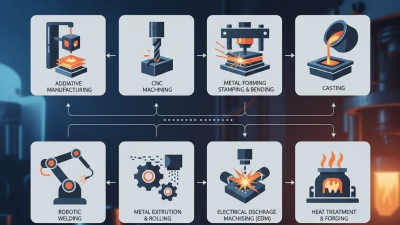
A supplier’s capability list is only a starting point. Ask which processes they perform in-house, such as laser cutting, press-brake forming, welding, and finishing. Compare those services with your drawings, material grades, part dimensions, tolerances, and expected order volume. Request a sample inspection report or first-article record. Evidence beats confident claims.
Review the equipment that would actually make your parts. Check the machine’s working dimensions and material capacity against your largest components and thickest stock. Ask how often equipment is maintained and how operators verify settings during a run. Calibrated gauges, micrometers, and documented inspection routines matter. Photos can help, but a production-floor visit—or a live video walkthrough—can reveal more. A polished website may still hide a narrow production range.
Industry experience should match your project, not just your sector. Ask for examples involving similar materials, tolerances, finishes, or production quantities, while respecting client confidentiality. Discuss a real challenge, such as keeping welded assemblies square or preventing burrs on thin sheet. Listen for specific answers about process controls and corrective actions. A supplier may have impressive machinery but little experience with your part type; that gap deserves a closer look. You may not know every risk at the start. Ask questions anyway.
Verify the Supplier’s Capabilities, Equipment, and Industry Experience
Suggested allocation for a supplier assessment—not an industry benchmark. Prioritize process capabilities and equipment, then verify relevant experience, quality controls, and material traceability. Confirm each area with objective evidence such as capability records, equipment lists, sample inspection reports, and references for comparable work.
A certificate is a starting point, not proof that every part will meet your drawing. The ISO Survey 2021 recorded 1,077,884 ISO 9001 certificates worldwide. That scale shows how common the system is—not how well a particular supplier applies it. Ask to see the supplier’s current certificate, its covered sites, and the actual procedures used for your work. For welded components, check whether its controls align with ISO 3834; for outsourced testing, review the laboratory’s ISO/IEC 17025 accreditation scope. The scope matters.
Then follow one part through the inspection process. Can staff connect its material certificate to a heat number, job traveler, and final inspection record? Ask how they verify calipers, micrometers, and coordinate-measuring equipment, and how they handle a failed reading. A capable supplier can show calibration records, inspection criteria, and a corrective-action example without exposing another customer’s data. For a tight-tolerance bracket, request the measurement method and sample size—not merely a pass stamp. A practical audit can reveal gaps that a certificate cannot. Honestly, paperwork can look tidy while shop-floor habits vary between shifts; verify both. Check whether first-article results, weld inspection records, and nonconformance trends are reviewed by someone empowered to stop production.
| # | Tip | What to Assess | Evidence or Questions to Request |
|---|---|---|---|
| 1 | Verify the quality management system | Check whether documented processes cover order review, production, inspection, nonconforming output, corrective action, and continual improvement. | Ask for a current quality manual or process overview, recent audit findings and closure status, and examples of corrective actions. |
| 2 | Confirm relevant certifications | Match certifications to the product and industry. ISO 9001 is a general quality management standard; sector-specific standards may apply to automotive, aerospace, or medical-device supply chains. | Review the certificate’s scope, covered site, issuing and accreditation details, and expiration date. Confirm any sector-specific requirement with your customer or regulator. |
| 3 | Check inspection equipment and calibration | Determine whether measuring equipment is suitable for the required tolerances and maintained under a documented calibration or verification program. | Ask to see the equipment register, calibration status, and sample records. Confirm how overdue, damaged, or out-of-tolerance equipment is handled. |
| 4 | Review the inspection plan | Look for defined inspection stages, acceptance criteria, sampling methods, and responsibility for checks on critical dimensions and characteristics. | Request a sample control plan or inspection checklist. Ask how inspection frequency is set and how changes to requirements are communicated. |
| 5 | Assess first-article and setup checks | For new or revised work, confirm that the supplier verifies the initial part or production setup against the drawing and agreed requirements before routine production proceeds. | Ask for a sample first-article report, including measured characteristics, results, drawing revision, and approval status. Agree when a new report is required. |
| 6 | Verify material identification and traceability | Check that material grades, heat or lot identifiers, and required records can be linked to the finished parts when traceability is required. | Request a sample material certificate and traceability record. Confirm how identification is preserved during cutting, processing, storage, and shipment. |
| 7 | Understand process capability and monitoring | For stable, measurable production processes, determine whether the supplier monitors process performance and uses appropriate statistical methods where useful. | Ask which characteristics are monitored, how data are reviewed, and what actions are taken when results show a trend or fall outside agreed limits. |
| 8 | Evaluate nonconformance and corrective action | Confirm that suspect or nonconforming parts are identified, contained, and dispositioned, and that recurring issues are investigated to address their causes. | Ask for a redacted example of a corrective-action report showing containment, cause analysis, corrective measures, and effectiveness checks. |
| 9 | Check control of outside processes | If operations such as heat treatment, plating, coating, or testing are outsourced, assess how the supplier approves and monitors those providers. | Ask how specifications are flowed down, how required process or test records are reviewed, and how changes or quality issues at subcontractors are managed. |
| 10 | Agree on records, reporting, and change control | Make expectations clear for inspection reports, certificates, record retention, nonconformance notification, and approval of changes to materials, processes, or production location. | Document required deliverables and retention periods in the purchase or quality agreement. Confirm who approves changes and how shipment status is communicated. |
Note: Certification and inspection requirements depend on the part, application, customer specifications, and applicable regulations. Verify requirements before placing an order.
A low quote can hide costs that appear later. Ask each metal manufacturing supplier to price the same drawing, material grade, finish, inspection level, packaging, and freight. Request setup, tooling, and expedite charges separately. Compare total delivered cost, not just the piece price. Price is not the whole story.
Ask suppliers to define lead time in writing: from approved drawing and material availability to shipment. A number without those assumptions is hard to compare. Check how they handle a late mill delivery or a failed first-article inspection. Can they provide a dated recovery plan? A spreadsheet can still hide uncertainty, so verify capacity against your actual order size and release schedule.
Communication and supply chain reliability need evidence. Request a sample production update, named escalation contact, and notice period for material substitutions. The 2024 MHI Annual Industry Report found that 55% of surveyed supply chain leaders planned to increase technology investment. That measures intent, not resilience—a distinction worth keeping. Ask what records suppliers can actually share, such as material certificates, inspection results, and shipment status. Then check backup sources, inventory practices, and how quickly they flag disruptions. Small details matter. A supplier’s confident promise is useful, but a clear response to a difficult question is more revealing.
A supplier’s contract should turn expectations into details you can check. Define the alloy, thickness, finish, critical dimensions, and acceptable tolerances. State who approves drawing changes and how those changes affect price or delivery dates. Include inspection records, packaging requirements, and a clear process for rejected parts. Vague language can become expensive later. A short review with your engineering and purchasing teams may reveal gaps before production begins.
Tips: Request sample parts made with the intended material and process. Measure key features with suitable tools, then inspect edges, holes, and surface finish under good lighting. Keep an approved sample as a reference. One sample is not a production guarantee, though; ask how the supplier controls variation across a full run.
Ongoing collaboration needs a practical plan, not just a friendly kickoff call. Agree on forecast updates, response times, technical contacts, and a regular review schedule. Ask how the supplier will flag material delays or quality trends, and what information they need from you. A simple shared change log can prevent conflicting instructions. Plans do shift. Leave room to adjust, and revisit assumptions when designs or order volumes change. I would not expect every issue to disappear; I would expect concerns to surface early and get documented.