How to Choose the Right Double End Bolt Size?
Choosing the correct Double End Bolt size is more than matching a diameter to a hole. It requires careful attention to thread type, pitch, length, strength grade, and installation conditions. A bolt may look suitable on a workbench yet fail to provide enough thread engagement inside an engine block, flange, or structural joint. Small errors matter.
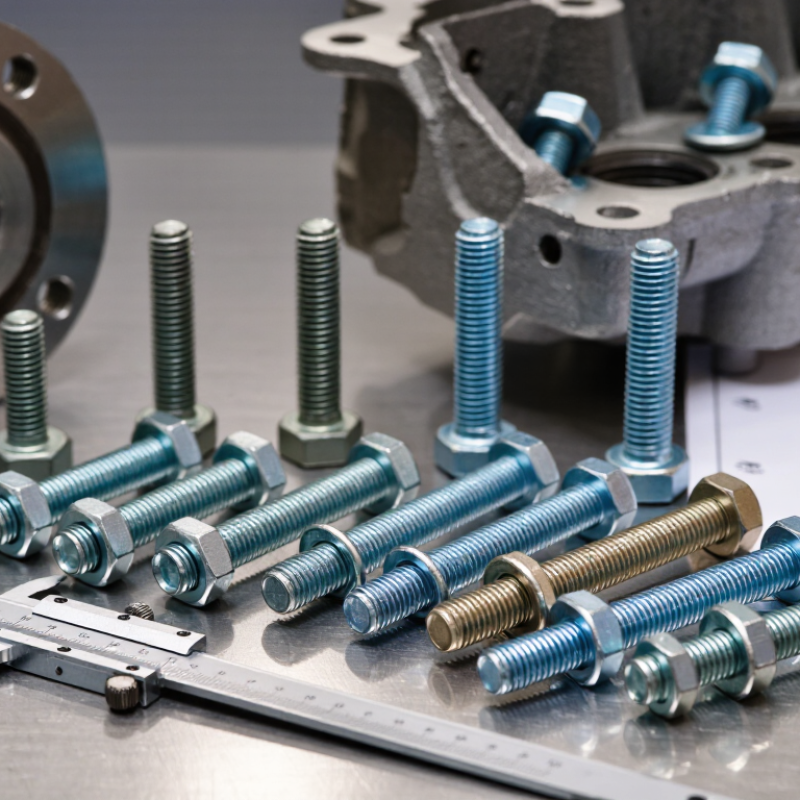
Experienced technicians usually begin with the equipment drawing or the original manufacturer’s specification. They confirm the thread diameter and pitch with calibrated thread gauges, then measure the required overall length. The exposed end must leave enough space for washers, nuts, and final adjustment. The embedded end also needs adequate engagement without reaching the bottom of a blind hole. It is an easy detail to overlook.
Load direction matters. Tensile forces, vibration, temperature changes, and repeated tightening can influence the correct Double End Bolt selection. Stainless steel may resist corrosion, while alloy steel often provides higher strength. However, material compatibility should be checked before installation. Galvanic corrosion can develop in damp environments.
Check the grade markings.
When standards are involved, compare the bolt with reliable ASME, ISO, or manufacturer data. Do not assume that a longer bolt is automatically safer. Excess length can interfere with nearby components or reduce clamping accuracy. In practice, measurements are not always perfect, especially on worn parts. Recheck them. A thoughtful sizing process prevents damaged threads, loose joints, and costly rework.
Understanding Double End Bolt Types and Thread Configurations
How to Choose the Right Double End Bolt Size?
Understanding Double End Bolt Types and Thread Configurations
A double end bolt, often called a stud, has threads on both ends with an unthreaded center section. Its design depends on the joint, available clearance, and required engagement depth. Equal-thread studs suit similar materials and balanced connections. Unequal-thread studs work better when one side enters a tapped hole while the other receives a nut. Tap-end studs usually have a shorter, more precise thread for blind holes. Fully threaded versions provide flexibility, but they may complicate alignment.
Thread configuration matters as much as diameter. Confirm whether the assembly uses metric or inch threads. Then check pitch, thread direction, and tolerance class. Coarse threads usually tolerate dirt and minor damage better. Fine threads offer more adjustment and clamping control, especially in thinner sections. Never match diameter alone. A 10 mm bolt with the wrong pitch will not fit a 10 mm tapped hole.
Measure the hole depth before choosing the threaded length. Leave enough room for full engagement without bottoming out. For nut-side threads, allow space for the nut, washer, and any required protrusion. I have seen installers select a longer stud for extra security, but excessive length can interfere with nearby parts. That assumption can fail. Check material strength, corrosion exposure, and tightening loads against reliable engineering tables or site specifications. A trial fit with clean, undamaged threads can reveal problems before final assembly.
How to Choose the Right Double End Bolt Size?
Understanding double end bolt types and thread configurations starts with comparing nominal diameter, thread pitch, and tensile stress area. The chart below uses standard Unified National Coarse (UNC) and Unified National Fine (UNF) thread sizes.
Tensile stress area values are shown in square inches and are based on standard inch-thread dimensions. Fine-thread configurations generally provide a larger tensile stress area for the same nominal diameter, while coarse threads are often preferred for faster assembly and better resistance to thread damage. Always confirm the required strength, engagement length, material, and installation conditions before selecting a double end bolt.
Matching Bolt Diameter, Length, and Thread Specifications
Choosing a double end bolt starts with diameter, not guesswork. Calculate the joint load, then compare it with the bolt’s tensile stress area. ISO 898-1 lists property class 8.8 steel fasteners at a nominal tensile strength of 800 MPa, with a 0.8 yield ratio for applicable sizes. Threaded engagement matters too. A common engineering starting point is one bolt diameter in steel, but softer materials may require deeper engagement. The joint material decides.
Length must cover both ends accurately. Measure the nut, washer, joint, and any exposed thread allowance. A practical detail is often missed: the threaded ends may not share the same usable length. Leave enough protrusion for full nut engagement, but avoid excessive exposed thread that collects dirt or damages during installation. NASA Reference Publication 1228 emphasizes preload control and commonly discusses tightening near 75% of proof load for suitable reusable joints. Torque alone remains imperfect because lubrication and surface condition can change friction dramatically.
Thread specifications must match exactly. ASME B1.1 governs Unified inch threads, while ISO 261 defines metric thread series and dimensions. Never mix a coarse internal thread with a fine external thread. Check pitch with a gauge, then verify diameter using calipers. Field measurements are not always clean. I have seen apparently correct bolts fail because pitch was assumed from diameter. That small shortcut deserves more skepticism. For critical joints, confirm the drawing, material certificate, thread class, and applicable inspection requirements before installation.
Selecting the Appropriate Material, Grade, and Strength
How to Choose the Right Double End Bolt Size?
Selecting the Appropriate Material, Grade, and Strength
Choosing a double end bolt starts with the joint, not the thread diameter. Measure the required engagement, exposed length, washer space, and nut height. ISO 898-1 lists an 8.8 carbon-steel fastener with a nominal tensile strength of 800 MPa. Its proof strength is lower, about 580 MPa, so design loads must not use tensile strength alone. That difference matters during tightening.
Material selection depends on the environment. Zinc-coated carbon steel suits many indoor assemblies, but stainless steel may perform better in humid areas. However, stainless steel can gall during installation. Use compatible nuts and controlled tightening. ASTM F606/F606M provides test methods for tensile, proof-load, and hardness verification. Ask for mill certificates and batch test results. A certificate is useful, but field checks still matter.
Tips: Match the bolt grade to the joint’s weakest component. Check thread engagement before ordering. For blind holes, confirm the bottom clearance. A longer bolt is not automatically safer. In practice, installers often overlook exposed thread length, especially when washers are added later. I have seen this create poor nut engagement and uneven clamping. Recheck the drawing after assembly. Small errors become expensive. Be careful with torque charts, because lubrication can change the achieved preload substantially.